Our Research
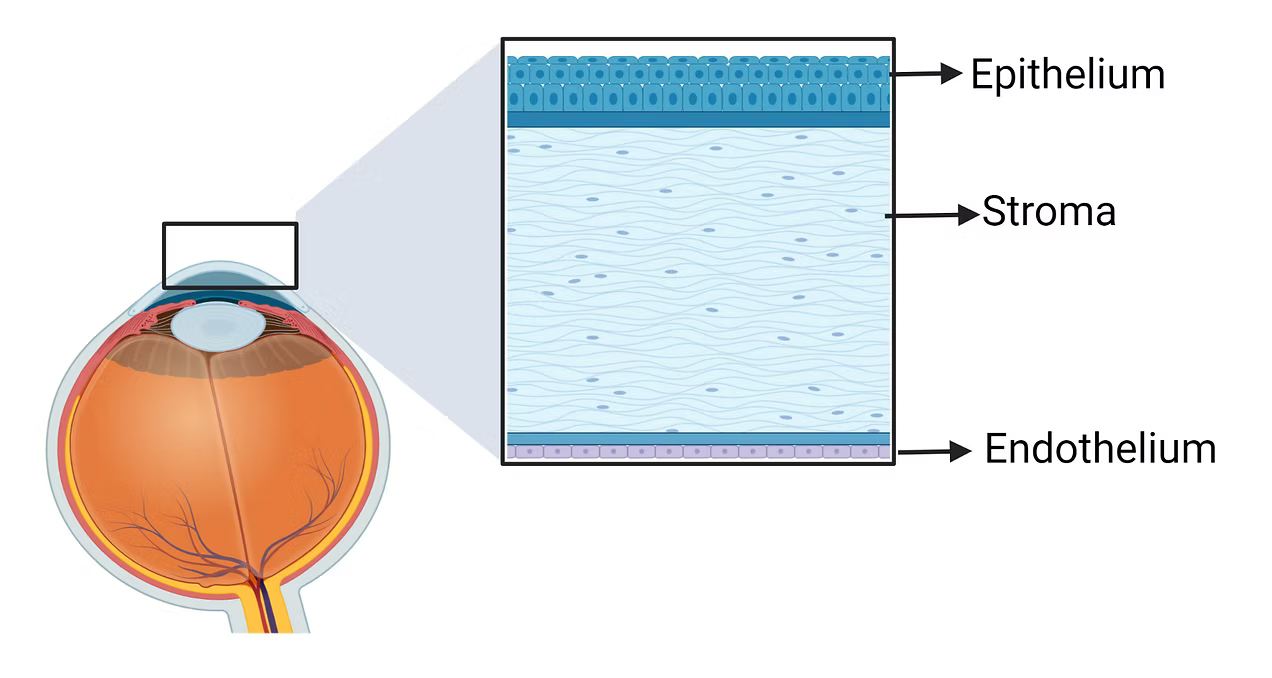
- Our lab aims to investigate the mechanisms that regulate the normal functioning of the corneal endothelium. The corneal endothelium is a single layer of non-proliferative cells that, when damaged, lead to corneal edema. Non-inflammatory diseases that arise due to the dysfunctions of the endothelium are called endothelial dystrophies.
- Corneal transplantation is the prevalent treatment modality for these diseases. By identifying the signaling pathways that regulate corneal endothelial homeostasis, we can develop therapies to treat dystrophies.
Molecular signals leading to the onset and progression of Fuchs Endothelial Corneal Dystrophy (FECD)
We developed a mouse model for Fuchs Dystrophy that has all the three major phenotypes – guttae, corneal edema and corneal endothelial cell loss.
In this animal model, and in FECD patient corneal endothelium, we observed significant decrease in proteasome pathway activities. Current focus in the lab is to determine the causes for proteasome pathway dysfunctions. In collaboration with Dr. Darci Jones Trader, we are studying the efficacy of small molecule activators of proteasome pathway to improve disease phenotypes in the mouse model.
Understanding the role of ECM associated signals in corneal endothelial homeostasis
The basement membrane of corneal endothelium, Descemet’s membrane, undergoes physical changes such as changes to stiffness, composition, and thickness, during disease pathogenesis. Yet, very little is known about the effects of these changes to the corneal endothelium. We recently discovered that decreasing substrate stiffness (as seen in FECD), is sufficient for cellular dysfunctions in corneal endothelium. We are exploring the precise mechanisms by which physical changes affect the corneal endothelium.